My Lunches with Orson is essentially a series of transcripts of the table conversations between independent film-maker Henry Jaglom and that great genius of film, theater and abrasive commentary. Orson Welles had the fortune to be well-known but the misfortune to be known best for what he despised. By the time these lunches took place, mention of his name was more likely to inspire references to "We will sell no wine before its time" then Citizen Kane yet Welles remained passionately interested in film and even his most off-hand opinion is interesting.
Dessert with Orson
My Lunches with Orson is essentially a series of transcripts of the table conversations between independent film-maker Henry Jaglom and that great genius of film, theater and abrasive commentary. Orson Welles had the fortune to be well-known but the misfortune to be known best for what he despised. By the time these lunches took place, mention of his name was more likely to inspire references to "We will sell no wine before its time" then Citizen Kane yet Welles remained passionately interested in film and even his most off-hand opinion is interesting.
Making Friends
The idea of making friends was born in part of a belief that Germany's Versailles grievances were justified and a view that accession to power had matured Hitler out of his Mein Kampf "excesses." At its root was the assumption that Hitler's appetite for conquest could be sated.
Lord Londonderry is representative of the more benignly deluded adherents of this belief. He wanted to be a statesman of the caliber of his famous ancestor Lord Castlereagh. Castlereagh's legacy is a bit of a mixed bag - revered as a diplomat today but in his time reviled by the likes of as an elitist and a reactionary by the likes of Byron and Shelley. It's difficult to find any evidence that Londonderry understood Castlereagh's accomplishments - he seemed fixated instead on the glory of his legend, glory he very much wanted for himself. Kershaw's character sketch of Londonderry fascinated me nearly as much as Londonderry's gusto for socializing with the likes of Goering and Goebbels repelled me. It is nearly impossible to put aside what we know of their monumental crimes and imagine a time when they might be viewed as moderating influences on the "more extreme" elements of the Nazi party.
A less talented historian would spend time decrying the lunacy of hanging out with Adolf, Hermann and the boys in hopes of avoiding war. Ian Kershaw is a very talented historian with the ability to remind readers that what is in the past and seems inevitable, once lay in the future and was not at all certain. His approach is detailed, likely too detailed for the casual reader, but it is compelling for anyone interested in the topic.
Fighting over last place
The life of a Romanov grand duke had its highs and lows. Among the highs were inconceivably large allowances, ornate living quarters, a selection of stylish uniforms, access to the entire company of the Bolshoi Ballet and trips to Monte Carlo on the family expense account. In the column marked “low” are arranged marriages, nosey relatives, pushy relatives, judgmental immediate family, and being murdered by the Bolsheviks in rustic settings. In the case of Grand Duke Michael Alexandrovich, add in that the Bolsheviks hid his murder and claimed Michael escaped, and that history has all but forgotten him.
Donald Crawford is most upset about that last bit and The Last Tsar is his latest attempt to set the record straight. This is his second book about Michael, the first being Michael and Nastasha, co-authored with his wife Rosemary Crawford. If you’ve already read that book be warned that there is very little new material here and, oddly, some relevant material from that book is left out. For instance, Michael’s romance with cousin Princess Beatrice of Saxe-Coburg isn’t mention here. What does get more attention is Michael’s war record. Overall, there’s no reason for the casual reader to bother with both books.
Michael’s story is interesting but Crawford doesn’t provide us with more than the bare bones of it. He references recent secondary sources, which is fine, but only to support his premise. Crawford has his opinions and his fondness for them makes this book tedious at times. Tsarina Alexandra is the villainess of the story – she’s described as “nagging,” “vindictive,” “jealous,” “hysterical” and “neurotic.” And that’s just in the first half of the book. It got on my nerves after awhile.
Crawford stubbornly presents Michael’s marriage to the twice-divorced commoner Natasha as a love story without ever giving the benefit of a hearing to Michael’s less than impressed family. It’s not a huge stretch to see that learning one’s son/brother/cousin has eloped with a woman who’s had three husbands in ten years wouldn’t inspire suggestions that “Our Love is Here to Stay” be played at the wedding reception. At a time when his nephew known to be in frail health, an uncle had recently been blown to smithereens, and it was too dangerous for his brother the Tsar to live in the capitol, I can’t blame the family for being unmoved by the power of love. Nor does Natasha come across as anything other than a beautiful woman who enjoys luxury and flattery.
Michael emerges as a someone content to “do the right thing” on a personal scale but until the war, not one to make sacrifices. Like his brother Nicholas, he is remarkable in his ordinariness. You get the impression that Michael would have made a swell house-guest but not much of a Supreme Autocrat.
In 2009 the Russian government “rehabilitated” Michael saying, in effect, that killing him was unwarranted. Whether Michael truly was the last Tsar (for a day) or not is probably best left to the experts. In my own un-expert opinion, having the Romanov dynasty begin and end with Michaels is reason enough to grant him the title it appears that he never wanted.
Blonde, Brunette or Beheaded
How did a woman rise from relative obscurity to influence the course of history and become queen of England? That is the question nearly every biography and fictional account of Anne Boleyn seeks to answer. In The Creation of Anne Boleyn Susan Bordo seeks to answer that and a less explored question: how did Anne go from historical figure to cultural touchstone?
Bordo is a cultural studies specialist rather than a historian. She is primarily interested in what Anne Boleyn means to contemporary culture but she grounds that meaning in an understanding of who Anne was. Or, perhaps better put, might have been. Given the paucity of contemporaneous first-hand accounts it is impossible to know what Anne thought or what drove her actions or what was actually said or even whether she was blonde or brunette. This incomplete picture has left room for writers and artists of all types to create Anne as they see her or need her to be to suit their narrative or world view. Bordo explores these shifting images of Anne - the shadows of the real woman, alternately larger and smaller than the long dead queen - to understand what informed and drove these depictions.
For anyone immersed in Tudoriana, this book may feel quirky in its focus: an entire chapter the 1969 movie Anne of a Thousand Days yet nothing on Evelyn Anthony's or Lozania Prole's vastly different conceptions of Anne. The same is true of Boleyn biographies where Joanna Denny's unique take is unexplored. Bordo does not pretend that this is a definitive study of every depiction of Anne Boleyn. You may find your favorites left out but you will find detailed consideration given to The Other Boleyn Girl (book, miniseries and movie) and The Tudors, among others.
I enjoyed this book overall. I found Bordo's historical analysis less compelling (but still interesting) than her cultural analysis. When Bordo brings the two together, such when she reminds readers that we must read Henry's letters to Anne's through the lens of Courtly Love instead of Showtime, this book becomes essential reading. If you know Anne Boleyn only from recent movies and miniseries, this book is a good place to start to learn more about this fascinating woman.
Sundays with Louis
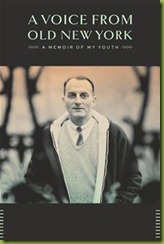
Occasionally he repeats himself or lets drop tantalizing details without filling in the lines. At times you wish he’d dish the dirt a bit more or wonder at his rather set opinions but you can’t help admiring the clarity of his insight into the closed world he knew so intimately. There are not big revelations here. Auchincloss knew both the Bundy brothers (McGeorge and William) and the Dulles brothers (John Foster and Allen) but you’ll find nothing here you won’t find in their biographies. I did find yet another proof point for my personal theory that Nancy Mitford was born a bitter hag and got worse as she aged, not that I needed another.
If you want big statements on society (with and without a capital S), look to his novels and short stories. If you want to spend a few hours – this is a very short book at less then 210 pages – hearing the memories of the master chronicler of 20th Century New York Society.
A Whale of a Time
Joe, The Queen of Whale Cay, demonstrated that with enough money and limited interest in the opinions of others one could pretty much live as one wished back in the 1920s and 1930s, including living openly as a lesbian, obsessing over a stuff doll and owning your own kingdom. Refreshingly, our boy-girl Joe is happy eccentric; generous and loyal to friends and lovers, interested in the welfare of her subjects, and generally enjoying life. Despite being inexplicably nicknamed "Betty" by the press, she also earns her title of "the fastest woman on water" by racing powerboats in the early days of the sport.
Summerscale strikes just the right note for this slim biography - light without being lightweight. She doesn't over think what motivated Joe and certainly doesn't ask the read to feel sorry for her. If Joe was a bit more comfortable proclaiming her love for inanimate objects rather than people or if she was surprisingly vague about her mother's first name, none of it seems to have resulted in regrets.
Joe was who she was, and everybody just had to accept it. She appears to have earned no enemies but many friends. And she lived well and gave generously but still managed to die with sizable estate. We should all be so lucky. A fun, quick read.
Must You Go On?
It's surprising that a dramatist known for his meaningful pauses inspired such a chatty memoir. Harold Pinter couldn't have asked for a more sympathetic biographer than his wife Antonia Fraser and this book, drawn from Fraser's journals, has a gentle intimacy reminiscent of a long, happy marriage.
Pinter emerges from these pages as a romantic (who knew?) devoted to his extended family. Fraser doesn't dish the dirt - even when it comes to their "scandalous" affair that broke up their respective marriages - nor does she present the couple as innocents. She does spend more time talking about the loss of beloved real estate than of discarded spouses but that is safer ground, I suppose.
I could have done with fewer pages about Harold's adventures with Vaclav Havel and other ventures into politics. Pinter's off-handed comment that Reagan and Gorbachev are "my boys" if their nuclear reduction treaty makes Fraser happy says far more about Pinter's devotion to his wife (and thus about him as a person) than a thousand rallies. But it is nice to learn that Pinter was a "house angel/street devil."
This isn't the definitive biography of Harold Pinter nor does it pretend to be. It is a warm remembrance of a man and a happy marriage.
Less of a Jerk but Still a Perjurer
Recent Acquisitions
Another Item for the Things Not To Do List
On the plus side we have a strong woman forging her own path in a male-dominated industry without sacrificing her dignity or her individuality. On the negative side we have Sam Irvin's unbridled prose. Irvin's ability to pack multiple cliches into a single sentence frequently put me in mind of air travelers who refuse to believe their extra large suitcase won't fit into the overhead bin. Behold:
"Somehow ... she managed to bury the hatchet, but it was a shallow grave on the edge of a slippery slope."
The book makes up for this by piling on the loony details that I find compelling. Who knew Van Johnson and Keenan Wynn had an affair? Who knew White Plains, NY once had a Bonwit Teller? Who knew you could ask your friends to help you paint tables with nail polish using those tiny little brushes? Irvin is at his best dishing the dirt. He's at his worst trying to convince readers of Kay's brilliance. I am sure my life span was decreased by the reference to Kay as "the Godmutha of Rap."
Ultimately Kay's story adds up to a long list of projects she didn't do. Literally. Plays she didn't star in. Movies she didn't make. Finally Kay takes on a major role as active godmother to Liza, supplying advice and "better gaydar" to her beloved goddaughter before coming a recluse. I guess excessive gaydar deployment will do that do you.
Recent Acquisitions
I'm really hoping EG keeps the appalling female love interests at a minimum on this outing.
Catherine the Great - Robert K. Massie
Maybe I'll even get around to reading that Potemkin biography I bought ten years ago.
Love Her to Death - M. William Phelps
Phelps is my True Crime find of 2011, I'm trying to meter out his books. Knowing there's reliably good true crime available makes the bad books bearable.
Take that, Virgin Queen
Poor Mary Tudor. First she goes from being daddy’s little princess to nearly being daddy’s latest executed-loved-one. Then after surviving against all odds and every precedent to become England’s first queen regnant she keeps upstaged in death by her little sister Elizabeth and nicknamed “Bloody Mary” to boot. No doubt about it, sibling rivalry can be a bitch.
Anna Whitelock has written Mary Tudor: Princess, Bastard, Queen with the stated intention of reclaiming her rightful place in history for this perpetually beleaguered royal. She does this by creating a very accessible biography. The scholarship is evident but the writing style is surprisingly fast-paced. Tudorphiles won’t find much new in the two-thirds of the book. This is well-trodden ground and Whitelock focuses simply on Mary’s point of view without wringing out tenuous interpretations. She also shows Mary’s shift from obedient Catholic girl to a woman for whom faith offered the only constant in her life.
Once Mary becomes queen Whitelock takes great pains to demonstrate how she paved the way (definitely unknowingly) for little sis Elizabeth to become Gloriana. The idea of a woman as ruler was unthinkable prior to Mary. After Mary it was a viable option. Whitelock is less successful in redrawing the portrait of “Bloody Mary” although in fairness to the author that was probably not the intention. Instead of claiming Mary was in thrall to her advisors when she sent hundreds to be burned at the stake, Whitelock points out that Mary was perfectly willing to die for her religious beliefs and thus wasn’t too troubled by others dying for theirs. It’s not a sympathetic portrait but it strikes me as far worthier for this notable survivor.
Recommended for history readers and Tudorphiles.
Recent Acquisitions
Party Animals by Robert Hofler
(Kindle)
A biography of agent/producer/party maven Allan Carr. Trashy, flashy fun. I can’t believe that I didn’t know about this book sooner. Amazon should have called my house as soon as this was published. My only regret is that because this is a Kindle book the publishers have probably held back on the photos. And I need to see some of what is described here.
Easy Riders, Raging Bulls by Peter Biskind
I got tired of waiting for a Kindle edition of this. I read a few pages in Barnes & Noble a few months ago. The combination of bad behavior and intelligent discussion of movies was too tempting for me to resist for long. Mark Harris’s Pictures at a Revolution reignited my love of film analysis mixed with behind the scenes details.
Mellon: An American Life by David Cannadine
Another book I’ve been waiting to see in Kindle version. After the Lords of Finance and Last Call I’ve had enough glimpses of Andrew W. Mellon. I need the full picture now.
Peers Gone Wild
Alternately hilarious and sad (and sometimes both), the stories of four awesomely awful individuals show exactly what too much money plus zero parental oversight can do to a person. The consequences range from multiple bankruptcies, multiple wives, prison sentences, a "lifelong shriek for attention" and being declared (by a judge) “absurdly stupid.” Alcohol, drugs, excessive spending, adultery, more alcohol, more drugs, sexual experimentation and, above all, consistently bad judgment: it’s like a century long frat party. With family crests on the silver.
Scriven provides a smorgasbord of witticisms about the lunacies he details but some of the best lines are delivered seriously by the participants. Consider the ex-wife (one of many) of the Duke of Manchester who describes her home as an “upholstered sewer outside Melbourne”. (The things they’re doing with waterproof fabric these days!) Or the Marquess of Bristol who declares that he didn’t go to his father’s wedding to his secretary because “I don’t go to office parties.” Or, my favorite, the friend who describes the relative merits of the Marquess’s favorite driver thusly, “being illiterate he couldn’t read the road signs, so not the greatest chauffeur.”
At one point in the festivities the utterly insane Marquess of Bristol joins forces with the equally batty Clint Murchinson Jr (of The Big Rich fame) to invest in oil fields. When John Murchinson suggests that they “saddle up the jet” it’s really anyone’s guess which activity any of them had in mind. One feels a certain kinship with the observer who states, “What I’m wondering is, where are the white sheep in this family?” No where in this book, thankfully.
A fun, fast blissfully witty book. Marcus Scriven writes like the world’s most erudite gossip columnist and for that I love him. Essential reading for anyone who enjoys fabulousness and wit.
Kindle note: there are, tragically, no photographs in the Kindle version despite the index of photos being tauntingly included up front. When one reads of a Duchess who routinely begins notes to friends with the words “Well Kid how is your sex life?” one wants to see what the letter writer looked like.
The “someone you thank for the party”
One of the pitfalls of reviewing a biography is that of finding oneself reviewing the life and not the work of the biographer. In the case of Cheever this danger looms especially large because John Cheever was a wreck of a human being from beginning to end. His voluminous journals were filled with what his own daughter described as “the gloomy, relentless sexual stuff” topped with a thick icing of self pity. It’s material that is so depressing it makes Sylvia Plath’s journals a comparative lark.Yet Blake Bailey turns the life story of a drunken, depressive, self-loathing, verbally abusive and deeply closeted man into a compellingly readable, life-affirming book. Bailey not only makes the creative process interesting, he keeps Cheever from turning into so vile a being that the reader can’t bear another page of him.
He also gives us the story of Cheever’s times, evoking the lifestyles of Westchester suburbanites so vividly that I found myself looking around my home county looking for the places and people Bailey (& Cheever) described. I’m glad I didn’t meet any of them behind the wheel, however, since this was one hard drinking crew, drinking themselves into oblivion at least once a week like a bunch of frat boys. The fact that any of them is a) alive and b) in possession of their factory issued liver is nothing short of a miracle.
On the other hand, reading about Cheever’s personal relationships made me want to drink. When he’s not being heinous to his wife and children he’s writing in his journal about his genitals. Which is impressive since he’s impotent for large swathes of the book. The short version is that Cheever was gay (or bi) and didn’t want to be. It’s not as simple as that, of course, but after a few decades I got the feeling that even Anita Bryant would have beseeched him to just be gay already. Sympathy for Cheever is hard to come by when he’s so homophobic himself.
The final years of Cheever’s life saw him accepting (to a degree) his own nature. Not that his relationships with his lovers were any more humane than those with girlfriends, wife and children. His relationship with Max Zimmer actually made me nauseous on occasion. Oblivious to Zimmer’s own feelings or desires, Cheever wrecks his life with nary a twinge of regret.
So where’s the life affirming part, you ask. In the day to day details with which Bailey builds his narrative. It’s most apparent in the final chapters when Cheever’s long suffering family rallies around him in death. Their loves and forgiveness along with Bailey’s clear-eyed and compassionate view of his subject elevate this tale far beyond any individual sordid detail.
Overlapping Voices
If you’ve seen even one Robert Altman movie you know that this is a man who would want his story told as an oral history. Altman’s use of overlapping dialogue forced the audience to choose which voice to listen to in a cacophony of sound. Mitchell Zuckoff invited a multitude of voices telling about the Robert Altman they knew allowing readers to sift through the stories to find the man himself.It helps that those speaking are an articulate, amusing bunch unafraid to tell embarrassing stories in which they feature or to call Kevin Spacey the “Norman Bates of Show Business”, for instance. No amount of wit would made the first half dozen chapters fly by, however. It’s admirable that Zuckoff wants to document the whole of Altman’s life but I would have been satisfied with fewer stories of Bob’s adventures at summer camp. Once Altman starts making movies Zuckoff’s pacing spot on, mixing details about the financing of MASH with choice gossip like Altman’s affair with Faye Dunaway. I’m still in awe of that revelation – wouldn’t have pegged those two in a million years.
The picture that emerges is of a well-loved if not entirely likable man. Zuckoff shows why so many actors were devoted to Altman but he also shows that Altman was just another nasty, loud-mouthed drunk on occasion. One minute you find yourself fascinated by the loyalty Altman engendered, the next you’re appalled at the loyalty he insisted upon. Like so many artists Altman put his work above any human relationship and that can be hard to take in large doses.
This isn’t a critical assessment of Altman’s work or an interpretation of his films. It’s Altman’s life story and critical to that is the story is his work so there are plenty of details about how nearly all of his films were made. Whether you’re a fan or not (I’m merely a sometime fan of his work), this is a very enjoyable book, not unlike spending a three-day long bender with the man himself, but without the hangover.
Recommended for film and biography fans. Note that this is a true oral biography with very little connective narrative.
Let's Settle This Thing
There is the air of settling things for once and for all in The Lady in the Tower, Alison Weir’s third to extensively cover some aspect of Anne Boleyn’s life. The subject for this biographical smack down is Anne's fall and the method is an exhaustive (and, yes, occasionally exhausting) comparison of the contemporary and near contemporary accounts of her arrest, trial and execution.This goes well beyond "was she guilty" and extends to why was she accused, who stood to gain from her fall and even "what was she wearing at her execution". Of course, what Anne wore is not the point, Weir uses the conflicting accounts of the simple matter of whether Anne's hair was loose or in a net to show us how little these accounts agree upon.
Weir deserves praise for her willingness to draw conclusions and eliminate possibilities. Where another historian might hedge with “perhaps” and “probably” she’s not afraid to weigh in with an “almost certainly. Nor is Weir afraid of a fight, calling out such fellow Tudor experts such as Eric Ives and Retha Warnicke when she disagrees. It’s refreshing, frankly as is Weir’s lack of fear in pronouncing the work of Joanna Denny wrong-headed at best. If at this point you’re reading this wondering who on earth these people are then think twice about embarking on this book.
I've read nearly all of Weir's books so I feel safe in saying that this is the least accessible of her works. It is well written but because it starts shortly before Anne is arrested, the book provides little to no background on her. If you want an account of how Henry met Anne you'll need to look elsewhere. I'm a Tudorphile so I enjoyed this book. I've read most of the secondary sources discussed in the book which made Weir's assessment of say Retha Warnicke's theories all the more interesting.
This is not a book for someone new to the story of Anne Boleyn nor even for someone who simply knows the story of the second of Henry VIII's six wives. If you are very interested in Tudor history and Anne Boleyn in particular, however, you'll find this book interesting. Recommended for Tudorphiles but not novices.
Who Wants to Marry a Millionairess?
In 18th Century England, if you were a second son with few prospects or a noble first-born son whose family fortune had run low you had one option to consider: marry a woman who was the sole heir to a large fortune. Like magic, her fortune would become yours entirely and she would cease to exist in the eyes of the law. It was like the lottery, only with a religious ceremony. Mary Eleanor Bowes was one such heiress who married first the Count of Strathmore and then the inspiration for Thackeray's Barry Lyndon. Mary Eleanor, to put it kindly, had atrocious taste in men.
Wendy Moore's entertaining Wedlock tells the story of Mary Eleanor fight to divorce her rogue of second husband and fans of Stella Tillyard's Aristocrats and Amanda Foreman's biography of Georgina, Duchess of Devonshire will find themselves at home. This is popular history that is as accessible as it is enjoyable. Prior knowledge of the times is not required but those familiar with the era won't find the background provided tedious. Moore sets out to inform and entertain and she accomplishes both. The story does bog down a tad in the middle - given that the topic at hand the abuse Mary Eleanor suffers at the hands of husband #2 Andrew Stoney that's not too surprising. Moore so effectively paints a picture of the villainous Stoney that readers may find themselves, like me, sorely disappointed that hanging wasn't an option for this cretin.
This is a story of female empowerment Georgian-style and sisterhood; it's also the story of conning someone into marriage that is so complex and so amazing it's no wonder Thackeray made a novel of it. Along the way we have bad behavior among the rich and famous (including a year of girl-gone-wild antics from Mary Eleanor that would leave Britney Spears saying, "Wow, that's trashy.") and Georgian phrasing that never fails to entertain. I, for one, plan on using the phrase "my deranged finances" at tax time next year. When the Court responds to one of Stoney's lunatic lawsuits with the words "If it be possible to conceive the Husband, of all others, who ought the least to be permitted to question any such Dispositions made by a Wife, the Appellant is that Husband" you know that this is the 18th Century legal equivalent of "You have got to be kidding."
Highly recommended for fans of history and biographies.
Kindle note: no photographs or linked footnotes.
24 Hour Party People
This is the story of a group of privileged young people who captivate London press with their antics (read: bad behavior and total willingness to behave like idiots in public) and occasional brushes with the law. No, it's not the story of Lauren and Heidi or Paris and Lindsey. The subjects are upper class twenty-somethings in the 1920s London.It starts out slow - Taylor actually spends a chapter pondering why they were called the "Bright Young People." Once it kicks into gear, around chapter 4, it's quite enjoyable as tales of people with pretensions to talent, pretensions in general, out-sized egos and a deep interest in clothes go. Evelyn Waugh (a major chronicler of this ilk), Cyril Connolly, and Cecil Beaton key players but the bulk of the story revolves around once revered but now forgotten bubble-heads like Elizabeth Ponsonby, Brian Howard, Brenda Dean Paul and Steven Tennent. Yes, they may not have been complete idiots but who really wants to defend the intellects of people whose major consuming interests were: parties, stunt parties, drinking, treasure hunts, costume parties, and more drinking.
The best parts are the extracts from the diaries and letters of the parents of one of the BYP. The Ponsonbys were horrified by their daughter's activities, her lack of ambition, and her profligate spending and their observations are both acute and frequently hilarious. When Dorothea Ponsonby writes, apropos of one of her daughter's friends "I can't look at him. He is like an obscure footman" she is forging new ground in put downs. In fact, I'm tempted to make this my go-to insult for the next month. Taylor is upfront about the fact that the majority of People in question aren't terribly impressive upon closer inspection. (Except in their networking and literary log-rolling, which is truly notable.) Yet several of them have already been the subject of biographies, (entitled "Portrait of a Failure" and "Serious Pleasures", no less) Taylor is interested in what made these people newsworthy, what inspired them and what impact they have left on society. The fascination with them seems almost perverse. It's not borne of respect or admiration. It's more like straining one's neck to see the remains of the car crash.
There's plenty of metaphorical and literal car crashes on display from Brenda Dean Paul's pioneering turn as a starlet drug addict, Elizabeth Ponsonby - generally and, best of all, the story of Gavin Henderson's wedding to a nice girl mummy approved of and the wedding night that the bride spent alone and he spent with a sailor he picked up. Somehow the marriage doesn't take. They natter on about becoming actresses, writing books or plays, painting pictures, but few of them ever actually create anything more permanent than a particularly inspired party invitation. It's easy to read these stories and snicker at the disproportion between the BYP's pretensions and their accomplishments. The sadder point that Taylor makes is that this really was the very best life they could imagine.
Once past their glory days a surprising number of the BYP move into fascism or communism. There's a joke to be made here about being addicted to parties but I'm going to skip it. Better jokes are made about this by Taylor himself and Cyril Connolly in "Where Engels Fears to Tread", a satire about a BYP who embraces communism and exhorts his fellow BYPs to join him with the words "Morning's at seven, and you've got a new matron."
Back to Heidi and Lauren etc., you could easily substitute their names (or any tabloid darlings de jour) for several characters here, switch "plays" for movies and "singer" for "writer" and you wouldn't notice the difference for several pages. Seeing how far back our fascination with pointless celebrity extends is interesting and thankfully this story is in the hands of writer who is sympathetic but not indulgent.
This is an enjoyable read for any fan of biography or early 20th century European history.
"We baptized the library floor"
Kay Francis is one of those actresses that you either get or you don't. It isn't that she's so complex, it's that Kay is in on the joke and those who enjoy her performances are in on it too. Yes, she's dressed to the nines while playing someone down on their luck -but you didn't come in off the Depression era streets to see someone in rags, now did you? She wasn't the best actress and she wasn't the worst, she was better than Norma Shearer (and I love Norma!) despite Mrs Thalberg's Oscar.It always surprised me that no one had written a dishy biography about Kay Francis. She was such a huge star in the 1930s and she did have all those husbands. Unfortunately for potential biographers, but fortunately for her, Kay was discrete. And Kay had a lot to be discrete about. She told much of it to her diary and based on the extracts presented here, Kay is my new dead best friend. Anyone who can sum up a day with "Read my new script - dear God!" is girlfriend material.
The authors cover Kay's career in detail and with the loving assessments of devoted fans. I'm right there with them in enjoying Kay's performances in movies like Mandalay and I Found Stella Parish. As film historian Jeanine Basinger put it in A Women's View, Kay was presence, not talent. That's not as harsh as it sounds, it's a simple assertion that Kay wasn't trying to be the great tragedian. Kay was focused on entertaining, not winning awards.
Kay did have a little time left over for her personal life. You can either look at it as quite depressing - 3 divorces, multiple abortions and a drinking problem - or you can see it as a strong woman living her life on her terms in times when women had few options. I prefer the latter interpretation and with lines from her diary like "Did something and had good time but can't remember" you get the feeling Kay preferred the latter, too.
This is a book for Kay Francis fans and movie buffs who want to know more about an undeservedly forgotten star.